

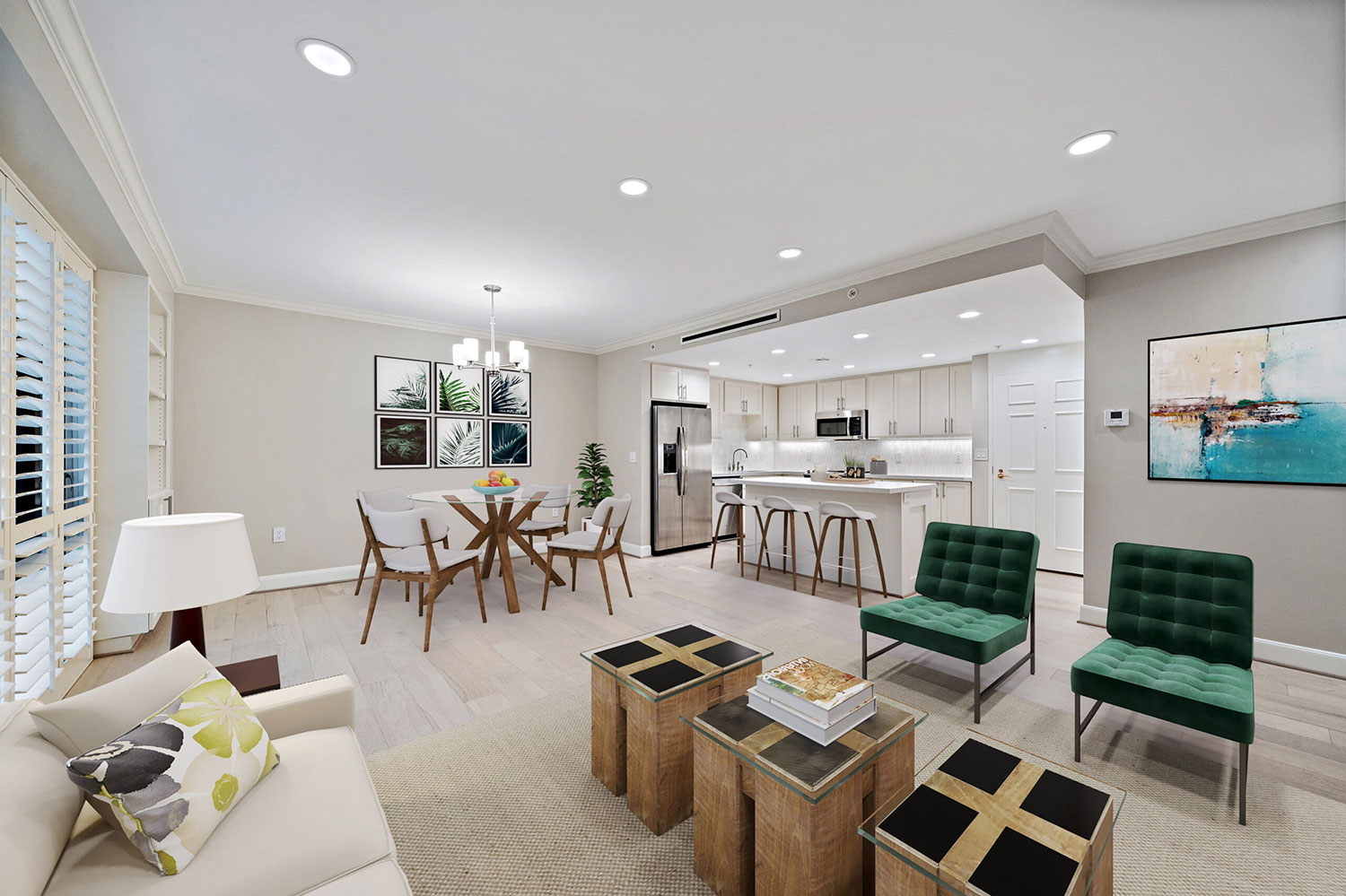
Whether you are capturing a newly furnished model apartment, a bustling bistro, or a therapy pool, the way you photograph your community directly impacts your first impression with prospective families.
Generic real estate photography often fails to capture the warmth and safety required in our industry. Here are my Top 5 expert tips for ensuring your community’s architecture and interiors truly stand out to investors and future residents.
1. Meticulous Framing: Respect the Architecture
In senior living photography, stability is key. Watch the vertical lines on the outer edges of your frame. If walls, door frames, or kitchen cabinetry appear to warp or curve, the space can subconsciously feel unstable or cheap.
- The Pro Fix: A high-end architectural photographer uses a specialized tilt-shift lens to correct perspective in-camera. This ensures your community looks structurally sound, stately, and professional—vital for reassuring adult children evaluating the safety of the environment.
2. Declutter for “Visual Flow” (Not Just Cleanliness)
What feels “cozy” in person often reads as “chaotic” in a photograph. While personal items add character, too much decor creates visual noise that distracts from the amenities you are trying to sell.
- The Strategy: Go beyond basic cleaning. Remove medical equipment, excessive throw blankets, and small knick-knacks. Clear surfaces allow the eye to travel through the room effortlessly.
- Why it matters: Prospective residents need to envision themselves in the space. If a room is overly personalized or cluttered, it feels like “someone else’s home” rather than their future apartment.
3. Shoot from “Heart Level,” Not Ceiling Level
A common mistake in real estate photography is shooting from too high up (near the ceiling) to “fit everything in.” In senior living, this creates a “security camera” effect that feels institutional and cold.
- The Pro Fix: We shoot from chest or waist height (approx. 45-50 inches). This mimics the perspective of a resident sitting in a chair or walking through the space. It grounds the viewer in the room, making the ceiling height feel grander and the carpet/flooring less dominant.
4. Editorial Composition: Straight-On vs. Corner Shots
Amateur real estate photos often shoot from the corner of a room to make it look as wide as possible. The result? A distorted, awkward shape that feels desperate.
- The Strategy: Treat your community like a boutique hotel. Favor straight-on, one-point perspective shots. Shooting a room flat-on creates symmetry, elegance, and balance. It transforms a standard “unit” into an editorial “lifestyle space” that looks right at home in a high-end brochure.
5. “Window Pulls” & Exposure Stacking
Natural light is a massive selling point for senior living, but standard cameras struggle to balance bright windows with darker interiors. You often end up with a dark room or “blown out” white windows.
- The Pro Fix: We use Exposure Stacking. This involves taking multiple photos of the same scene at different brightness levels and blending them in post-production.
- The ROI: This allows us to show the bright, cheerful interior and the clear view of your landscaped courtyards or greenery outside. Connecting the indoors with the outdoors is crucial for biophilic design and mental well-being—make sure your photos prove you offer that connection.
Our team at Keynote Creative is always ready to talk if you have questions. We specialize in commercial multi-format media production for new developments, retirement communities, healthcare groups, aviation, and more. Reach out below.
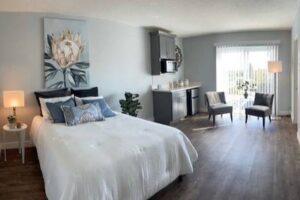
Bad photo: This tiny bedroom looks small, cramped and dark.
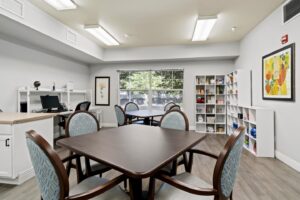
Bad photo: The angle and table make this room look small and sterile.

Bad photo: Warped furniture and clutter are tough to see past.
Contact us today to discuss your next media project: 406-672-1372